Published time: August 04, 2014 12:21
The US secretly sent young Latinos to Cuba to trigger the political unrest,
says a new leaked report.
says a new leaked report.
The ‘traveling spies’ working undercover
within health and civic programs were put in danger as there was
no safety net if they had been caught.
The ‘travelers’ project was launched in Cuba back in October 2009 by the US Agency for
International Development (USAID) , best known for overseeing billions of dollars in
US humanitarian aid. It was secretly dispatching Venezuelan, Costa Rican and Peruvian
young people to the island nation, said an AP investigation. The American authorities
hoped that these people would help to provoke a revolution in the country.
Young Latinos often posed as tourists. They traveled across the country and recruited
people whom they believed they could turn into political activists.
Another US attempt to spy on the neighboring country was from an HIV-prevention
workshop, which is labeled by memos obtained by AP as "the perfect excuse" for the
program's political goals.
AP also found some interesting documents revealing how the members of the program were communicating. They used encrypted memory sticks to hide their files and sent encrypted messages.
The ‘travelers’ used innocent content on their laptops so that they wouldn’t be suspected by Cuban authorities.
When they wrote "I have a headache," it meant they suspected they were being monitored by the Cuban government. "Your sister is ill" meant they wanted to cut their trip short.
"We worked it so that the government here didn't know we were traveling to Cuba and helping these groups," Yajaira Andrade, a former administrator with a Venezuelan organization, told AP, "because that was when [President Hugo] Chavez was in power, and if he had known about us - that some Venezuelans were working to stir rebellion - we would have been thrown in jail."
However, according to AP investigation, the workers almost failed their task to "identify potential social-change actors." According to one of the Latin American agents, they got a 30-minute seminar on how to evade Cuban intelligence. He added that there was no safety net for inexperienced workers if they were caught by Cuban authorities.
"Although there is never total certainty, trust that the authorities will not try to harm you physically, only frighten you," read a memo obtained by the AP. "Remember that the Cuban government prefers to avoid negative media reports abroad, so a beaten foreigner is not convenient for them."
The ‘spying’ program went on even after the scandalous arrest of Alan Gross, a US international development professional. He was arrested while in Cuba working as a US government subcontractor for USAID in December 2009 and is now serving his 15-year term in one of Cuban prisons.
"We value your safety," one senior USAID official said in an email.
"The guidance applies to ALL travelers to the island, not just American citizens," another official said.
According to AP files, one contractor commented on the arrest of Alan Gross.
"They arrested a contractor from another agency. That could be dangerous," one Skype message cited by AP read. "Thank God he's not one of ours."
In the meantime, AP wrote several questions to UNAIDS to clear the situation with ‘Cuban spying’.
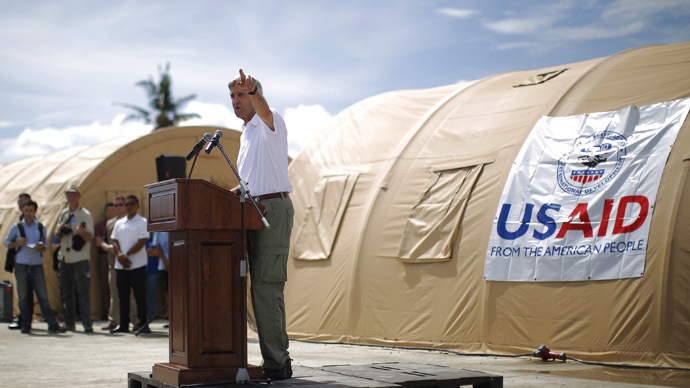
While Creative Associates declined to comment, USAID said that the US bodies helped the Cuban people “to determine their future.”
“USAID and the Obama administration are committed to supporting the Cuban people's desire to freely determine their own future," the agency told AP. "USAID works with independent youth groups in Cuba on community service projects, public health, the arts and other opportunities to engage publicly, consistent with democracy programs worldwide."
Another HIV workshop program had a dual purpose, added USAID.
It "enabled support for Cuban civil society while providing a secondary benefit of addressing the desire Cubans expressed for information and training about HIV prevention," it told AP.
US intelligence also didn’t bother to pay much money to the spies who worked in such conditions. According to AP obtained data, a dozen of Latin Americans were paid less than $5.41 an hour.

The data shows that USAIDS’s contractor Creative Associates International even used the relatives of the young spies to carry cash for them. However, the families of the contractors were not aware that the funds were from the US authorities.
The revelations about US spying program come after another scandal: ‘Cuban Twitter’, the messaging program launched by the US in Cuba which was intended to undermine the country's government. Both Cuban Twitter and the travelers program were funded by USAID.
The Cuban Twitter scandal broke on April 3 this year, when AP revealed documents saying that the US engineered a text messaging network in Cuba to try and spread unrest in the communist country. More than 40,000 people, unaware that the network was created by the US government, were sharing news and opinions using the service.
The initial plan was to gain users by allowing access to light news stories, such as baseball bulletins, music and weather updates. However, once a critical number of subscribers was reached, operators would introduce political stories aimed at tarnishing the reputation of the Cuban government, with the aim of creating a ‘Cuban Spring’.
Comments (30)

Gato Salinas 05.08.2014 18:06

Alkhan Rashid 05.08.2014 10:40


No comments:
Post a Comment